Rebate fulfillment companies: What they do and how to compare them
By Abby Quillen●6 min. read●Oct 20, 2026
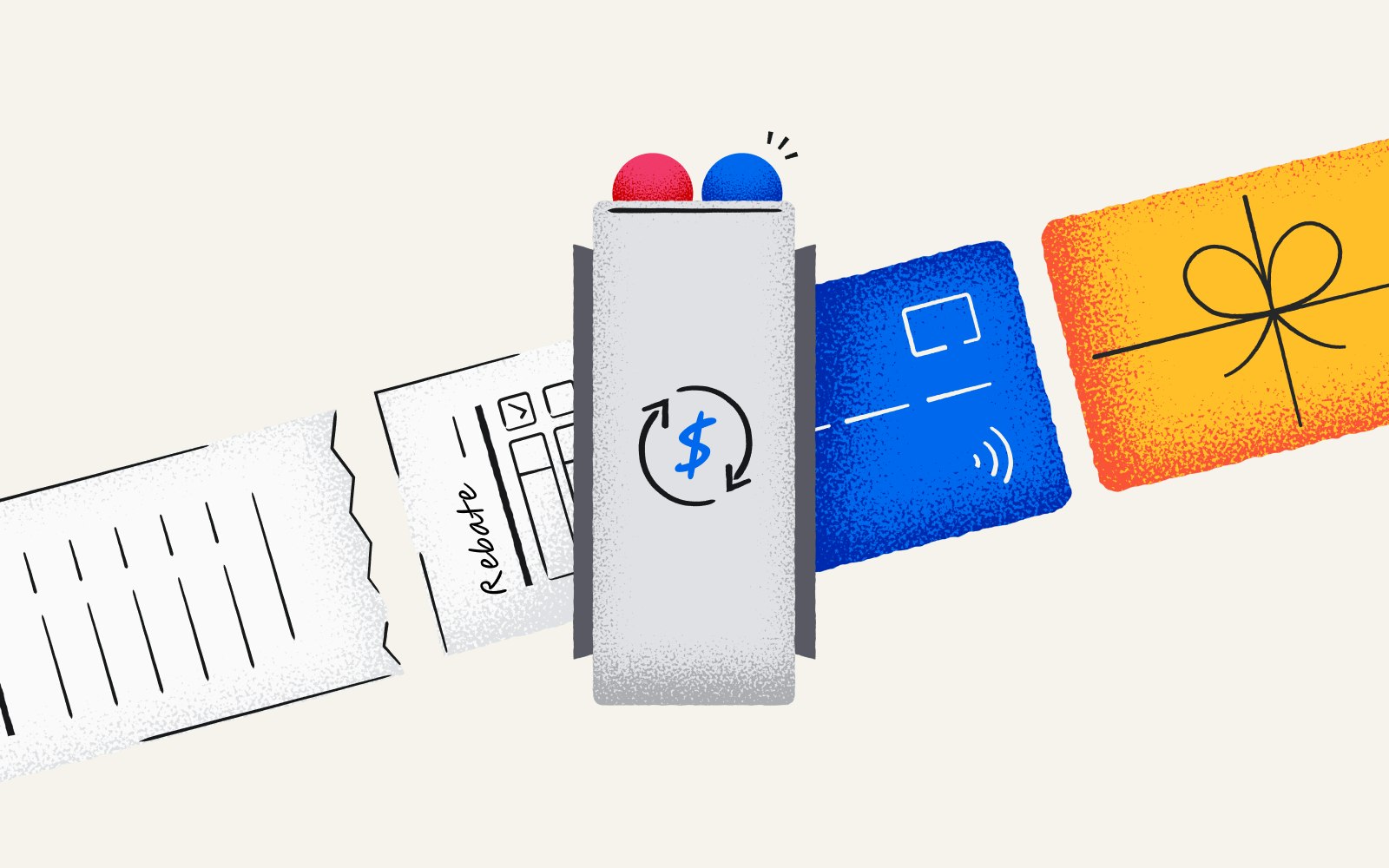
A rebate fulfillment company is a third-party provider that manages some or all of a rebate program for a manufacturer, retailer, or other business. The services it offers may include accepting, validating, and approving claims, delivering payouts to eligible customers, and providing customer support.
Some providers handle the entire rebate process, while others specialize only in specific services. Identifying the services you need helps narrow your options, so you can find the right rebate fulfillment company more quickly.
Key takeaways
Rebate fulfillment includes two jobs: claim processing and payout.
Some brands outsource both jobs. Others run claims in-house and use a payout partner to deliver rebates.
The payout methods you choose affect how customers perceive the value of the rebate.
When you’re choosing a payout provider to partner with, compare payout options, fraud controls, cost structure, and compliance support.
What does a rebate fulfillment company do?
Rebate fulfillment includes two core services: claim processing and payout. Some rebate processing companies handle both of these services, while others only handle one. Brands may decide to manage claims processing in-house while partnering with a payout provider for rebate delivery.
Consumer rebate fulfillment sometimes gets confused with B2B rebate management software. While both refer to incentives, they’re not the same thing. Consumer rebate fulfillment returns some money to an individual consumer after a qualifying purchase. Manufacturers use B2B rebate management software to administer rebates to businesses that meet specific purchase or sales targets.
How the rebate fulfillment process works
The rebate fulfillment process includes five steps.
Program design: The brand designs the rebate program, including claim rules. It decides which products qualify for a rebate, the deadline for submitting a claim, and the receipts or documents the customer must submit.
Submission: The brand or processor designs a user-friendly claim site or rebate form, which the customer uses to submit a claim.
Validation: The processor checks to make sure each customer meets the promotion’s eligibility criteria, reviews customers’ receipts, invoices, or online order confirmations to verify the purchase, and screens claims for fraud.
Approval: The processor makes the decision to approve or reject the claim.
Payout: The payout platform delivers the rebate to the customer, tracks payments, provides recipient support, handles returned or failed payments, and may help the brand manage tax documentation and reporting.
Types of rebate fulfillment providers
Rebate fulfillment providers generally fall into four categories. Here’s how they compare.
| Provider type | What it handles | Typically a fit for |
|---|---|---|
| Full-service rebate processor | Program design, claim submission portal, validation, fraud prevention, support, payout, and reporting | Large brands that want to hand off the entire rebate program |
| Claim intake software | Claim forms, receipt upload, and validation. (Must be paired with a separate payout provider.) | Brands that want control over claims without building their own system |
| Payout platform | Payout delivery, recipient choice, tracking, support, and tax forms | Brands or agencies that already run claims in-house |
| Check printing and mailing vendor | Printing and mailing paper rebate checks | Legacy programs that haven't moved to digital payouts |
Should you outsource claims, payouts, or both?
To determine the model that best fits with your rebate program, first, consider how many claims you’ll receive. If volume is low, it may make sense to process claims in-house. But also factor in your internal operations. Do you have the staff, time, systems, and expertise to manage processing?
Next, consider how much control you want over claim rules and customer data. When you run your own claims, you retain the most control over eligibility requirements, claim approvals, and customer data, and you can partner directly with a payout platform that handles payout choices, delivery, tracking, and support.
Fraud exposure matters, too, especially if you offer high-value rebates. If fraudulent claims could result in significant losses, consider whether you have the tools and expertise to verify purchases, detect duplicate submissions, and flag suspicious activity. If you don’t, it may be better to partner with a claim processor that offers fraud detection capabilities.
If claim volume is high or you don’t have the operational capacity to process claims in-house, a full-service processor may be the best fit. These providers handle both claims and payouts, reducing work for your team. But at the same time, you may lose some control over claim rules, customer data, and the payout experience.
What to compare when evaluating rebate fulfillment companies
Whether you’re choosing a full-service provider or payout partner, compare providers based on their capabilities, costs, security, and how well they fit with your program. Consider these factors.
Payout options and perceived value
Payout method affects how consumers view the value of your rebate. In a 2023 study by Tremendous and the Decision Lab, consumers weighed different payment methods for a $300 rebate. While they saw prepaid Visa cards and cash transfers as roughly equal, they viewed mailed checks and store credit as taking $16 to $130 off the value of the rebate.
Choice may be the best option of all. Ask payout providers whether they offer consumers payment choices, including prepaid Visa or Mastercard, checks, digital gift cards, and monetary options like PayPal, Venmo, and ACH. Tremendous offers 2,500+ payment options via digital rebates.
Payout speed and expiration
Make sure the provider can deliver rewards quickly with expiration dates that actually work for the recipient. If rebate delivery is slow or your recipients can’t actually access their payments, you may end up dealing with a flood of support tickets and even need to cover reissue costs.
Maytronics, a robotic pool cleaner manufacturer, runs rebate campaigns for in-store purchases. When working with a previous payout partner, customers often received their rebates late when they were already expired. That meant Maytronics often paid for rebates twice. After switching to Tremendous, Maytronics cut support calls by 17% by issuing rebates that don’t expire for up to a year.
Fraud controls at each stage
Fraud prevention looks different at the claim stage versus the payout stage. Ask which of these fraud controls each provider covers.
| Fraud type | Where it's typically caught |
|---|---|
| Duplicate or altered receipts | Claim stage during receipt review and duplicate matching |
| Multiple claims from one person | Claim stage and payout stage during identity and velocity checks |
| Payout fraud, such as recipients posing as multiple people | Payout stage at payout-level fraud screening |
Tremendous includes built-in fraud protection tools at the payout stage that help identify suspicious payout activity before you send rewards.
Cost structure and unclaimed funds
Companies may charge a mix of fees, which can include per-claim fees, platform or subscription fees, setup fees, check printing and postage fees, and extra fees for international payouts. Make sure you understand all the costs you’re responsible for.
In addition, ask what happens to money allotted for rewards that customers don’t redeem or spend in full. Depending on the program’s terms, unspent money could go back to your brand or to the fulfillment provider.
Tax and compliance support
Retailer or manufacturer cash rebates paid after a qualifying purchase usually aren’t considered taxable income as they’re treated as adjustments to the purchase price. But tax treatment depends on the type of program and individual. Consult a tax professional about your specific program.
If your program includes taxable or reportable payments, ask vendors whether they include support for collecting Form W-9 and preparing Form 1099 for recipients who receive payments above the IRS reporting threshold.
Integrations and reporting
Find out how the claim processor sends approved claims to the payout provider, whether it’s via CSV upload, API, or integrations like HubSpot and Zapier. Ask whether the process is automated and how the system flags failed transfers or missing information.
Look for a payout provider that offers real-time payout tracking and exportable data for reporting and reconciliation. These features help your team investigate failed payouts and monitor campaign spending.
Questions to ask a rebate fulfillment company before you sign
Finding the right provider starts with asking the right questions. Confirm exactly what the provider will handle, what it costs, and what happens when rewards go unredeemed. Here’s a breakdown of the questions to ask different types of providers.
| Topic | What to ask | Applies to |
|---|---|---|
| Services | What services are included? | Both |
| Data security | How do you keep customer data secure? | Both |
| Fraud controls | Which fraud checks run at the claim stage and which at the payout stage? | Both |
| Cost structure | What are your fees? | Both |
| Claim review | How long do claim reviews take? | Claim processor |
| Integrations | How do you send approved claims to the payout provider? | Claim processor |
| Payout options | Do you offer recipients their choice of payment options? | Payout platform |
| Payout speed | How quickly do you deliver payouts? | Payout platform |
| Payout expiration | When do payouts expire? | Payout platform |
| Unclaimed funds | What happens to unclaimed or unspent rebate funds? | Payout platform |
| Tax and compliance support | What tax reporting support do you offer? | Payout platform |
| Reporting | Do you offer real-time tracking and exportable data? | Payout platform |
The right partner or partners should simplify rebate fulfillment, offer transparent and predictable pricing, and provide a smooth consumer experience that makes your customers want to continue shopping with your brand.