Navigating the new competitive landscape in health and wellness marketing
By Mindy Woodall●5 min. read●Jan 8, 2026

The health and wellness industry moves fast. In our recent survey, marketers at various organizations reported that new competitors are entering the market, consumers are taking longer to make purchase decisions, and it’s getting more expensive to promote their brands. Standing out feels a lot harder than it used to.
“We are operating in a highly regulated and saturated market. The big players are well established and share can only be gained by taking it from the competition,” said one survey respondent.
But as a marketer, you still have ways to win. To compete effectively, you need to get strategic about customer acquisition, as well as find ways to differentiate your brand that don't rely solely on massive ad spend or steep discounts.
These five strategies can give you an edge and help you keep up with the competition.


Understanding what you're up against
When you’re trying to compete effectively, it helps to understand what's actually happening in the market.
Established competitors are spending more
In our recent survey of health brand marketers, 78% said established players in the space are increasing their marketing spend. That means the brands customers already know are getting even louder. They're buying ads, investing in reach, and showing up more frequently in places where consumers spend time.
New brands are entering the market
At the same time that existing brands are spending more, 61% of marketers reported new competitors are launching regularly. It feels like a new telehealth app, supplement brand, or subscription service goes live every few months. Each new entrant risks chipping away at the customer attention you're already competing for.
Differentiation can be challenging
More than half of health and wellness marketers (56%) say they struggle to differentiate from competitors. When an increasing number of brands offer similar products or services and target the same audience, standing out can become a real challenge. Customers see multiple options that look very similar to each other and don’t necessarily know how to pick the right one.
Price wars aren't the main issue
Interestingly, only 28% of marketers cite price pressure or discounting as a top competitive challenge. It seems most health and wellness brands aren't competing primarily on price. Customers care about trust, quality, and experience more than getting the best deal.
That's good news because it means there's room to compete on factors other than being the cheapest option available.
And regardless of what challenges you’re facing, taking a more creative strategic approach can make or break your success.
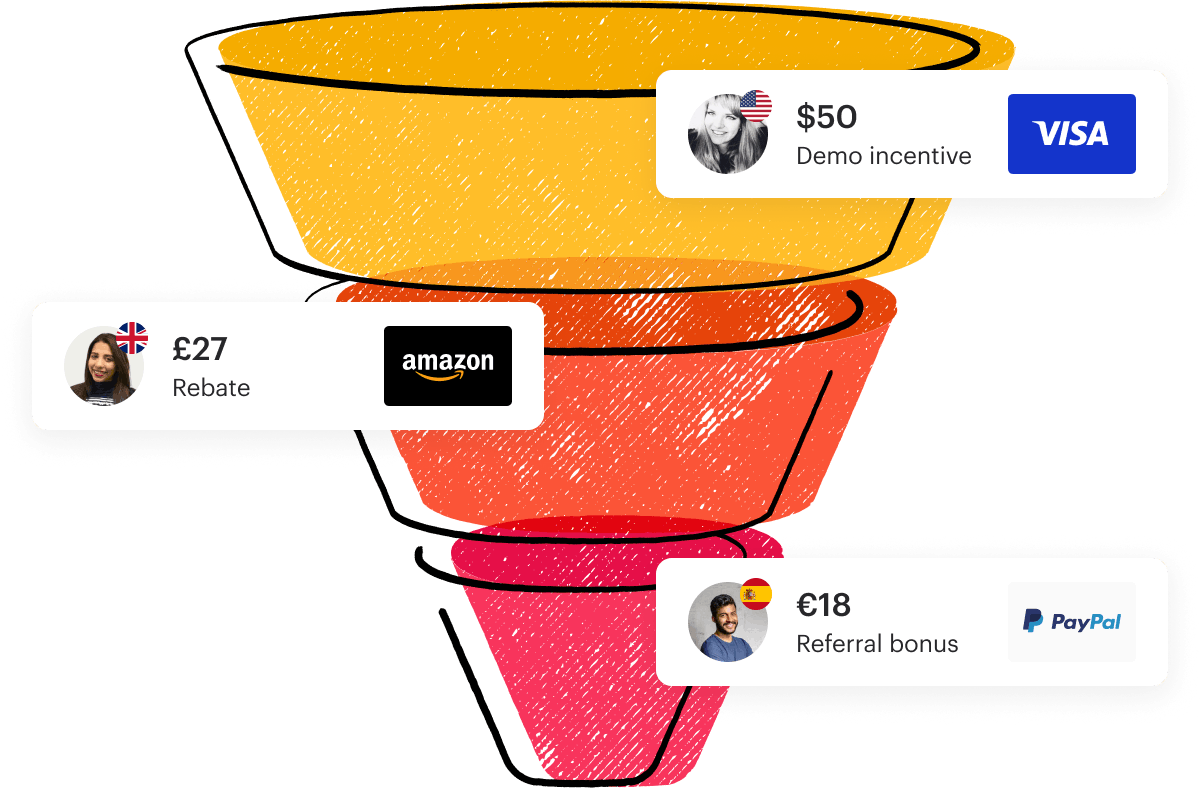
Strategy 1: Use incentive programs to win and keep customers
Incentive programs can encourage customers to take the actions that matter most to your business:
Referrals
Repeat purchases
Completing onboarding steps
Staying engaged over time
Our survey data shows that 72% of health and wellness marketers already run active incentive programs, with referral programs being the most common. These programs give you a way to attract and retain customers without having to discount your product or services.
When incentives work better than discounts
Discounts can change how customers perceive your pricing. If you run too many sales, people might learn to wait for the next one. In the health and wellness space, where you're often marketing premium products or services, frequent discounting risks undermining the value of your offerings.
Incentives work differently. They reward specific actions without changing your base pricing. A customer who refers their friend gets a reward, but your pricing stays intact. Someone who completes their first appointment receives a thank-you gift, and it doesn’t devalue your service. You're reinforcing positive behaviors instead of conditioning people to expect lower prices.
Incentives also let you target the behaviors that drive growth. They can encourage first-time bookings, reward referrals, bring back lapsed customers, or recognize loyalty milestones to encourage retention.
Strategy 2: Differentiate through customer experience
When over half of health and wellness marketers say they struggle to differentiate from competitors, the answer isn't always product features or pricing. You need to think about how customers experience your brand at every touchpoint.
This includes everything from how easy it is to book an appointment to how quickly your support team responds to questions. In health and wellness, where trust matters more than in many other industries, these details help shape whether or not someone will choose and stick with you over a competitor with a similar offer.
Focus on the moments that matter most
Look at your customer journey and identify high-impact moments where you can create a noticeably better experience. Small improvements in these moments add up quickly. When a customer is comparing three similar brands, the one that seems to make things the easiest or most pleasant is the one they'll remember.
Make good experiences consistent
Every positive interaction helps build your reputation. Brands that excel at customer experience deliver a consistently good experience across every channel and touchpoint. From a marketing perspective, that means every communication touchpoint, from email newsletters to reminders and follow-ups, should be on-brand, personalized, and relevant to the consumer.
Strategy 3: Compete on trust, not marketing volume
When you can't outspend competitors, focus on building trust faster and more effectively than they do. With health and wellness in particular, trust matters quite a bit. Customers want to know that other people like them have had good experiences with your brand.
Lead with proof
According to our survey data, 72% of health and wellness marketers find case studies with specific results to be the most helpful content when evaluating new solutions. Your customers likely think the same way. They want to see real outcomes from real people.
Use customer testimonials, before-and-after results, and third-party reviews to show social proof. Highlight specific metrics when you can, such as satisfaction scores or measurable health outcomes. Show how your service has worked for others.
Transparency also works as a trust signal. Be clear about your processes, pricing, and what customers can expect. The more straightforward you are, the less friction customers feel when deciding.
Strategy 4: Build defensible advantages through owned channels
Paid advertising naturally gets more expensive as competition increases. But owned channels like email lists and SMS subscribers give you direct access to customers without paying for every single interaction.
Owned channels become more valuable over time, not less. Building owned channels requires upfront effort, but it pays off by reducing your dependence on paid media. You get more control over customer relationships.
Keep in mind that every customer you acquire through paid channels should ideally become part of an owned channel. You just have to implement some bridges between ads and your checkout flow to:
Capture email addresses
Build SMS lists
Encourage social media follows
Strategy 5: Leverage influencers and affiliate relationships
Influencers and affiliates give you access to audiences you can’t reach on your own (at least not without big spend). And they come with built-in trust and credibility that takes years to build through traditional marketing.
Build trust through influencers
The key to working effectively with influencers is finding ones whose audiences align with your target customers, values that reinforce your brand, and credibility extends to your category. A dermatologist reviewing a skincare brand, a mental health advocate talking about a telehealth platform, or a dentist recommending an oral care product carries more weight than a generic wellness influencer sharing the same content.
These partnerships help newer or smaller brands compete on trust and resonance rather than budget.
Reach wider audiences through affiliate programs
Affiliate programs can act as an extension of your marketing team. Research from Partnerize found that 51% of online consumers say affiliate endorsements led them to buy sooner than they would have otherwise.
Instead of incentivizing existing customers to refer friends, you can partner with influencers or other affiliate outlets to introduce your brand to their audiences.
For brands struggling to stand out in crowded markets, affiliates offer a way to reach customers through channels you don't control but can still benefit from.
Summary
The health and wellness market is more competitive than ever in 2026, but that doesn't mean you need the biggest budget to hit your marketing KPIs. Understanding what you're up against can help you make smarter, more strategic choices.
The most effective approach combines multiple tactics:
Creating seamless customer experiences
Using incentives strategically instead of relying on discounts
Building trust through social proof and transparency
Investing in owned channels that compound over time
Leveraging influencers and affiliates to extend your reach
None of these strategies require you to match competitors dollar-for-dollar. They require you to be more intentional about where you focus your efforts so you can thrive in a competitive market and find advantages that aren’t easily copied.