Gift cards vs. monetary rewards: What recipients prefer by age group
By Izabelle Hundrev●4 min. read●May 26, 2026

When you're running an incentive program, you spend a lot of time thinking about reward value. But the format of a reward, whether it's a gift card, prepaid card, bank transfer, or a digital wallet deposit, can matter just as much. Even the most generous reward can miss the mark if it comes in a format the recipient doesn’t actually want.
To better understand what recipients value most, Tremendous surveyed U.S.-based adults ages 18-65 about their preferences when receiving gift cards and monetary options. The results reveal clear trends that can help you decide which reward options to prioritize for your programs.
Key takeaways
Monetary rewards like bank transfers and digital wallets are preferred over gift cards across all generations
Recipients across all age groups are more likely to participate in an incentive program when monetary options are offered
The ability to spend a reward anywhere is a universal top priority
People are more open to getting gift cards for smaller-value rewards, especially among older age groups (55+)
Recipients are most likely to choose a gift card when it’s relevant, convenient, or for a retailer they already shop at
Monetary rewards win across every generation
Regardless of age group, reward recipients prefer monetary options. Across all five groups surveyed, digital wallets and bank transfers ranked highest. In the 25-34 age group, no respondents selected a gift card as their top preference.
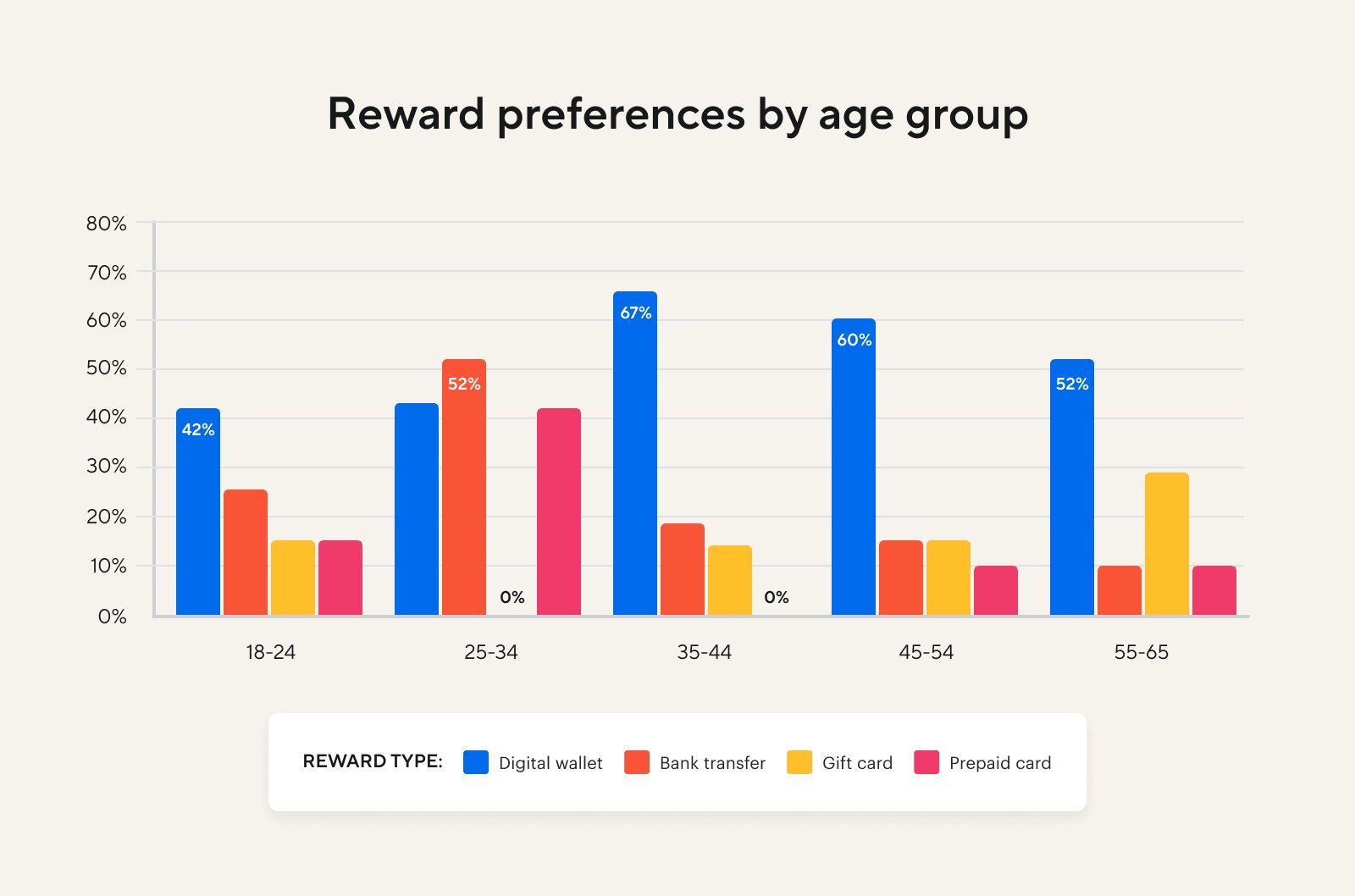
This doesn’t mean that you shouldn’t offer gift cards or prepaid cards. But it suggests that monetary options need to be a default part of your reward mix. For most recipients, they’re the preferred incentive.
Monetary options can boost incentive program participation
Our survey asked consumers to rate how likely they'd be to participate in an incentive program that offered only gift cards and a program that offered only monetary options.
Across all age groups, respondents were more likely to participate in a monetary-only program than in a gift-card-only program.
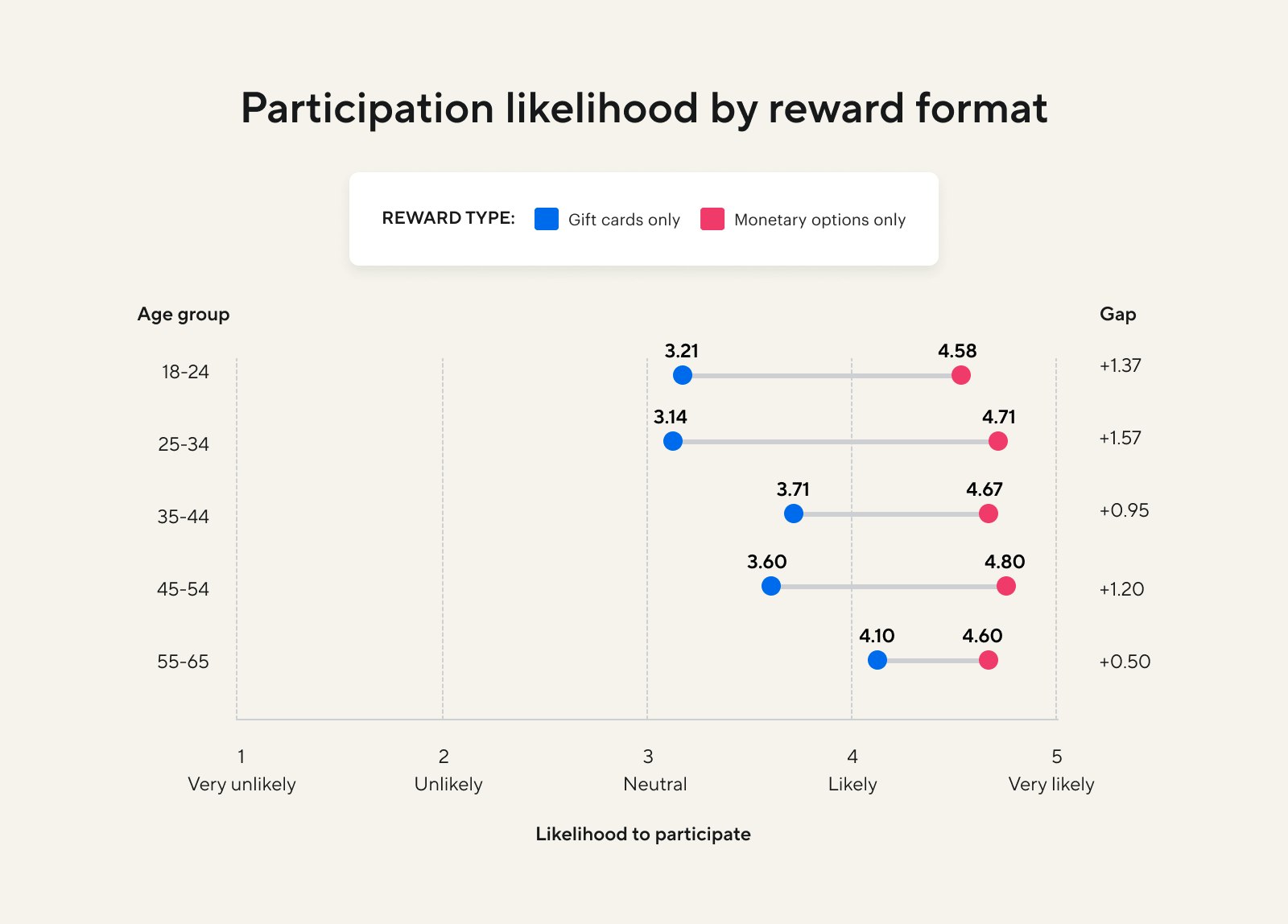
The gap was largest among the 25-34 age group, which rated monetary-only programs nearly 1.6 points higher than gift-card-only programs. Respondents in the 55-65 age group had the smallest difference between reward types, and were the only demographic likely to participate in a gift-card-only program.
The takeaway is that reward type affects whether people participate in your program at all. Adding monetary options can meaningfully improve audience engagement, especially with the 18-34 age group.

Reward flexibility is a universal priority
When choosing between a gift card and a monetary option, recipients across all age groups ranked the flexibility to spend a reward anywhere as the most important factor. It ranked as the top consideration among respondents ages 18-44, and in the top two for all five age groups.
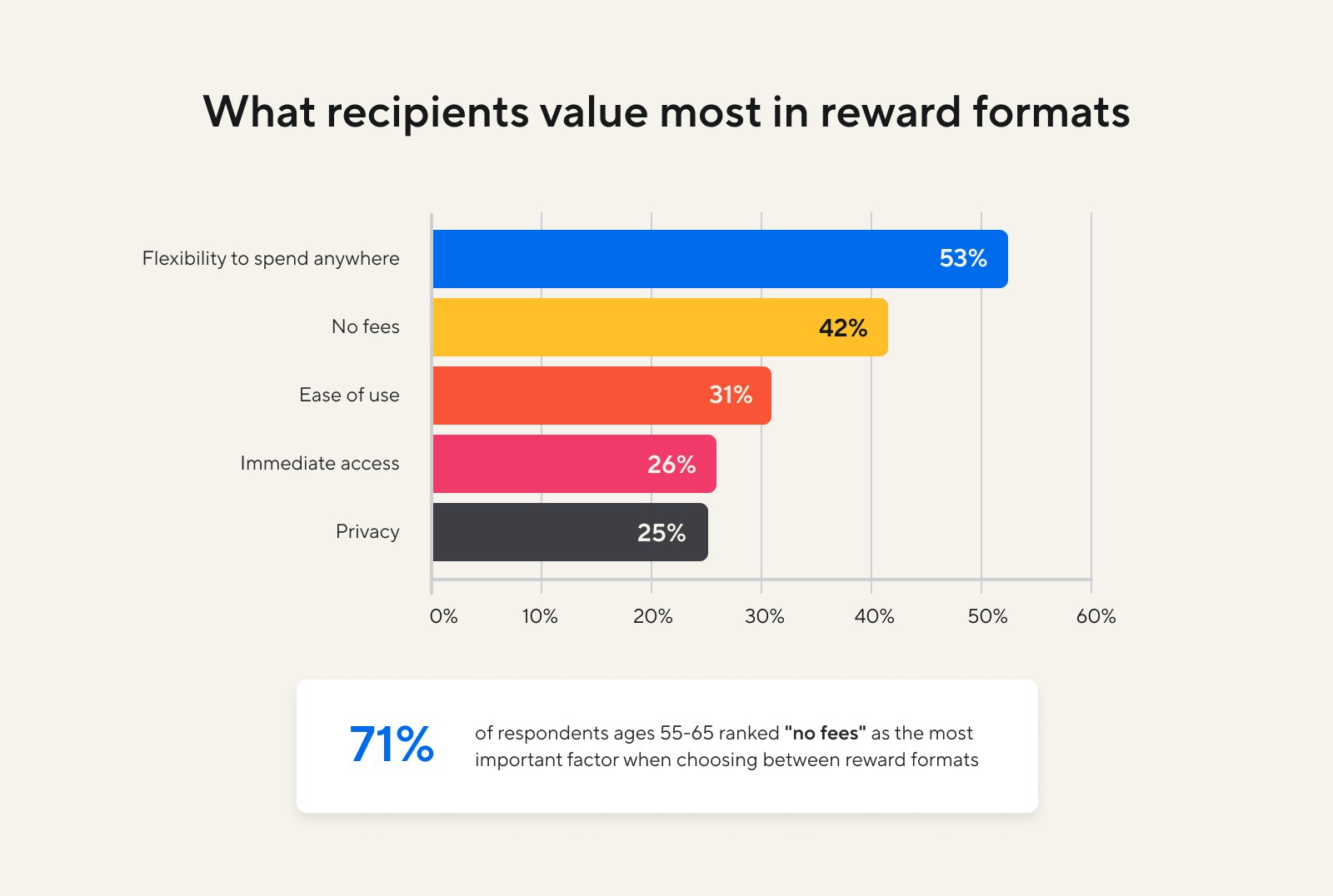
An interesting trend: the 55-65 age group placed a higher value on avoiding fees, with flexibility ranking second. This suggests that for older recipients, a fee-free experience matters more than the ability to spend a reward anywhere.
While retailer-specific gift cards are more limited by design, they typically don’t come with any activation or inactivity fees. Open-loop cards, such as prepaid Visa and Mastercards, give recipients greater freedom to spend as they choose and with lower fees than monetary payout methods like bank transfers or PayPal. Prepaid cards are worth considering if you want to offer card-based rewards without the flexibility tradeoff.
Gift cards are more attractive for smaller rewards, especially for older recipients
As reward values decrease, recipients become more open to retailer-specific gift cards. Across all age groups, respondents were more likely to choose a gift card for a $10 reward than a reward worth $100 or more.
This preference was especially pronounced among recipients ages 55-65: 43% preferred gift cards for a $10 reward compared with just 16% for a higher-value reward. This data suggests that recipients view gift cards differently depending on the context.
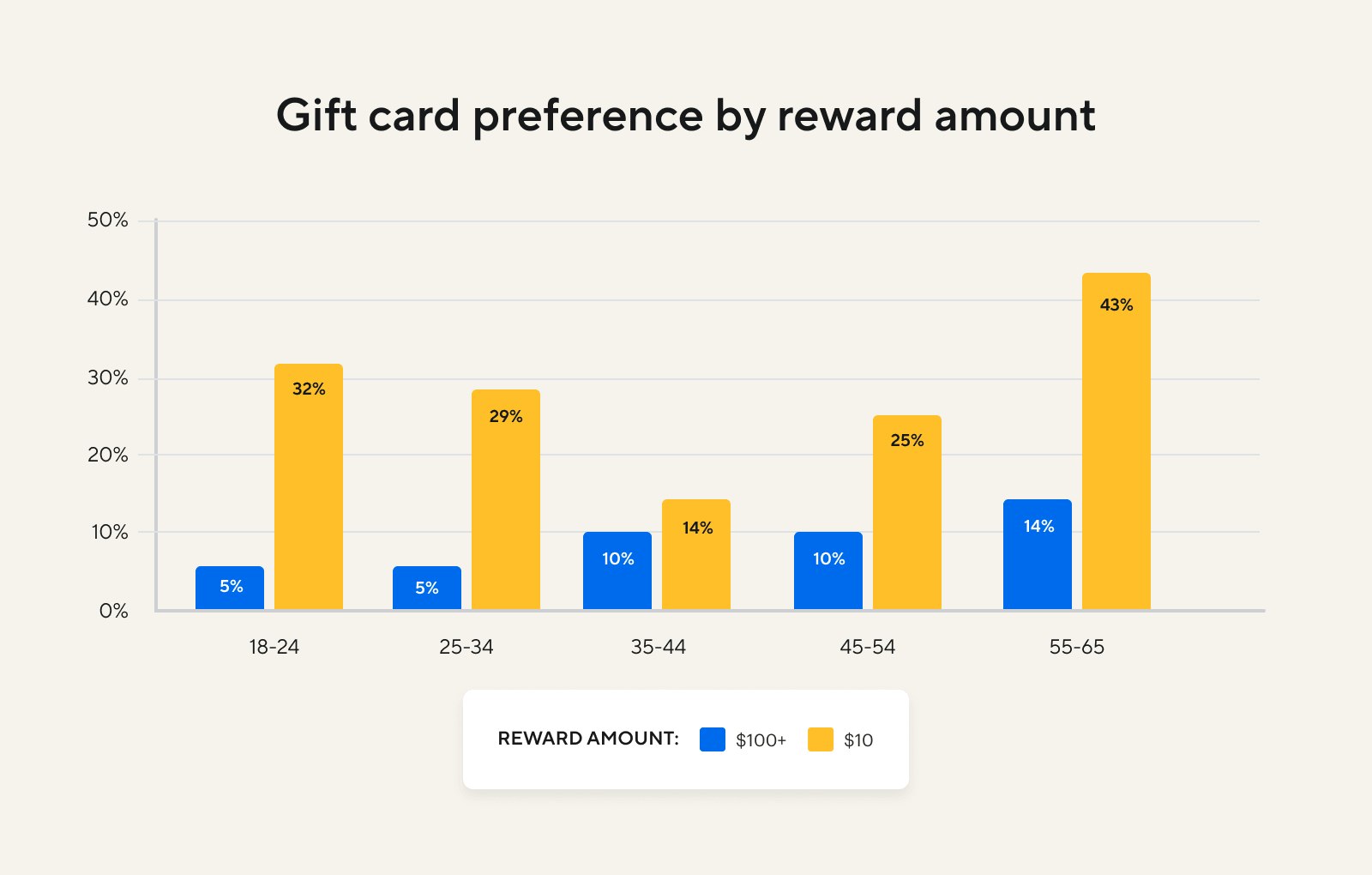
A likely explanation is that the reward value changes how recipients weigh tradeoffs. The restrictions that come with a retailer-specific gift card are easy to brush off when the reward is small. At higher values, those same limitations feel more significant. A $10 gift card to a familiar retailer feels like a bonus. A $100 card to a store you rarely visit can feel like a constraint.
The takeaway: for high-value rewards, monetary options are often preferable since they offer the greatest flexibility. For smaller rewards, a gift card from a familiar retailer can land just as well.
Gift cards work best when they’re relevant and easy to use
While respondents generally preferred monetary options, gift cards still have a place in the incentive ecosystem. When asked in which situations they’d prefer a gift card over a monetary option, nearly half (48%) of respondents said when it was for a retailer they already shop at.
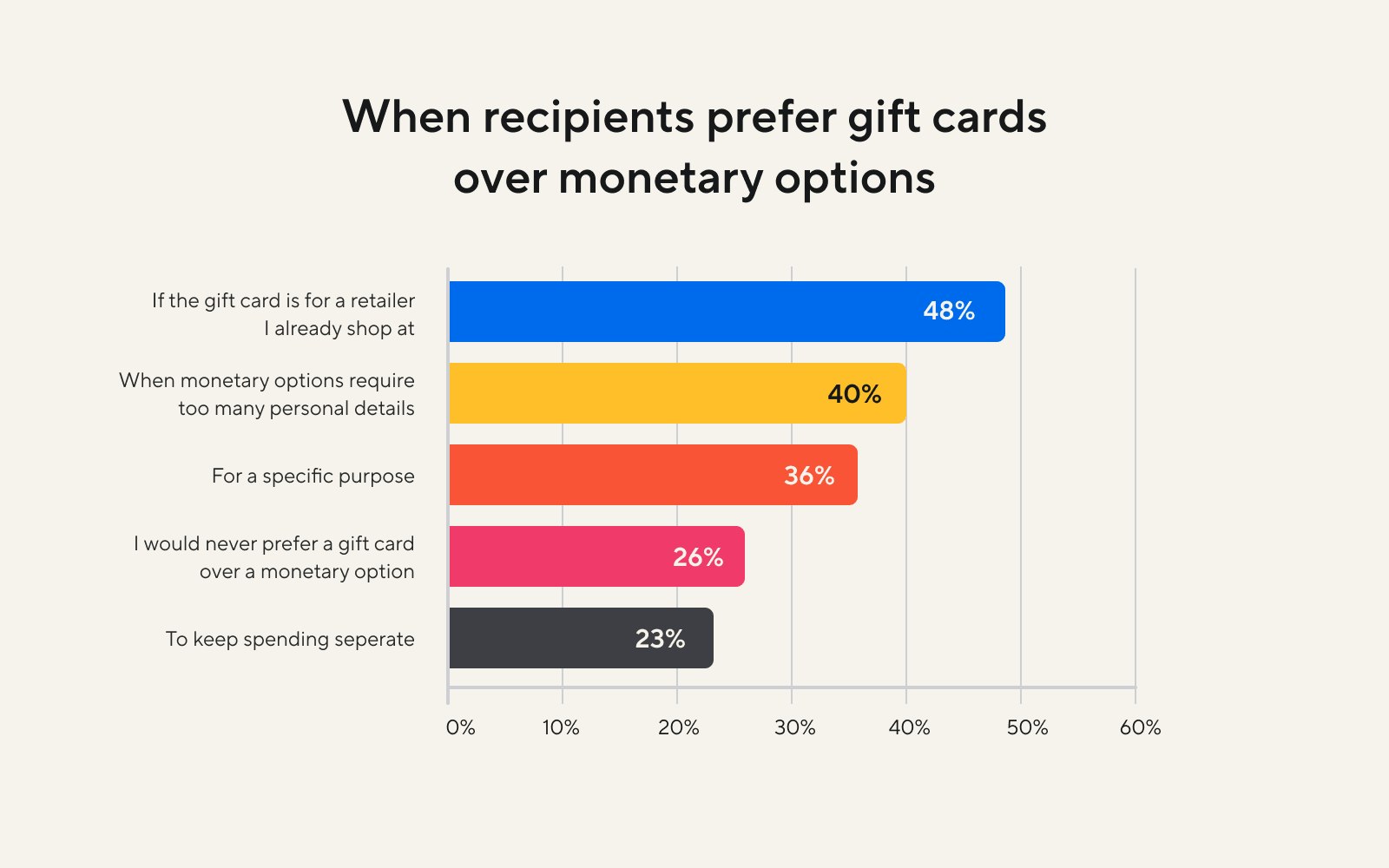
The second most common scenario was practical rather than preferential. 40% of respondents said they’d choose a gift card when a monetary payout requires too many account details. This suggests that, in some cases, a recipient’s preference for a gift card reflects friction in the redemption process rather than a genuine preference.
Notably, only 26% of respondents said they would never prefer a gift card over a monetary option. That means most recipients are open to gift cards as long as they’re for a retailer they already purchase from and easy to redeem.
The case for offering recipient incentive choices
The most effective incentive programs don’t limit recipients to a single reward type. They give people the ability to choose an option for themselves.
Here are a few things to consider as you build and refine your incentive programs:
Monetary options should be part of your incentive mix. Recipients across all age groups prefer them, and their presence can meaningfully increase participation rates.
Flexibility matters more than format. If monetary options aren’t feasible, open-loop prepaid cards are a strong alternative. They give recipients spending freedom without locking them into a specific retailer.
The right gift card offered in the right context can be as well-received as a monetary option. They tend to work best for smaller rewards or when they’re relevant to where recipients already shop.
A smooth redemption experience matters. If your monetary payout process requires too many steps or personal details, recipients might prefer the convenience of gift cards.
Look for an incentive platform that supports a variety of reward types. That way, you don't have to predict what your audience wants: they decide for themselves.

Methodology
We surveyed 102 U.S.-based adults across five age groups. The survey was conducted via Prolific and SurveyMonkey. It included 15 multiple-choice questions covering reward format preferences, comfort level with digital payments, and likelihood of participating in incentive programs under different reward scenarios. Data was collected in May 2026.


